When you think of a kitchen island, you probably picture a large rectangular countertop with a few barstools tucked underneath. While that classic design certainly has its place, kitchen islands have evolved into something much more versatile. With thoughtful planning, an island can become a dining space, a gathering spot, an architectural focal point, or even a way to preserve the features that make a home unique.
One of the most exciting parts of kitchen design is discovering that an island doesn't have to follow a traditional shape. Depending on the layout, available space, and how you want to use your kitchen, there are countless ways to customize its form and function.
Here are a few island designs worth considering when planning your next kitchen.
1. Curved & Rounded Islands
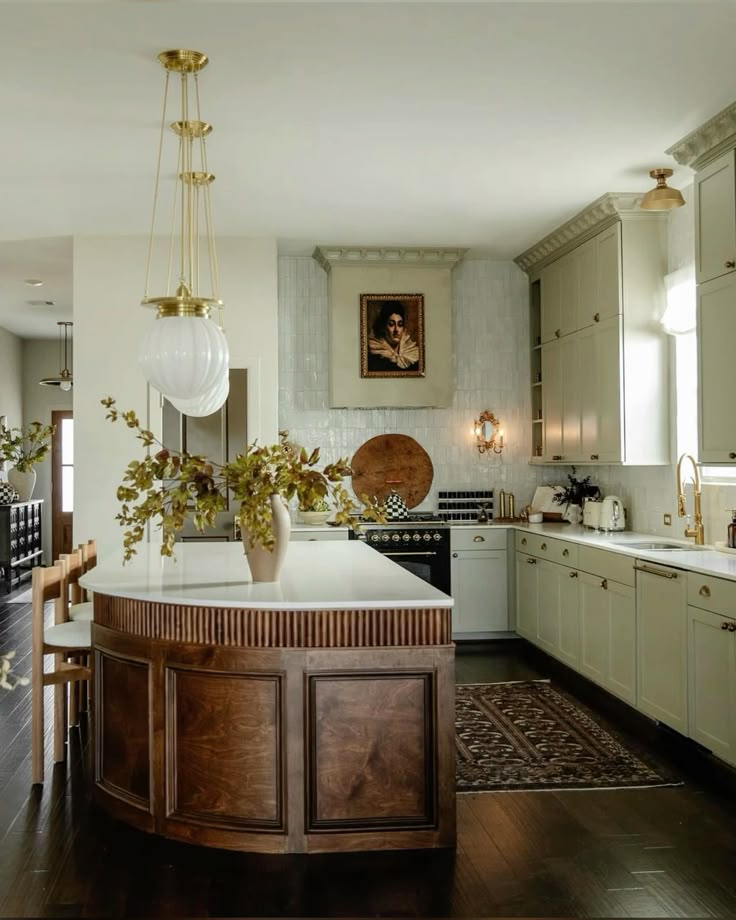
Why stick to straight lines when you can introduce a little movement? Curved and rounded kitchen islands soften the overall look of a kitchen, creating a more organic and inviting feel. They can help balance a space filled with strong architectural lines and cabinetry while introducing a beautiful custom element.
Beyond aesthetics, curved islands can also improve the flow of a room by softening corners and creating more natural pathways around the island. Whether it's a fully rounded end, a gently curved seating area, or an entirely organic shape, this design makes a statement without feeling overly complicated.
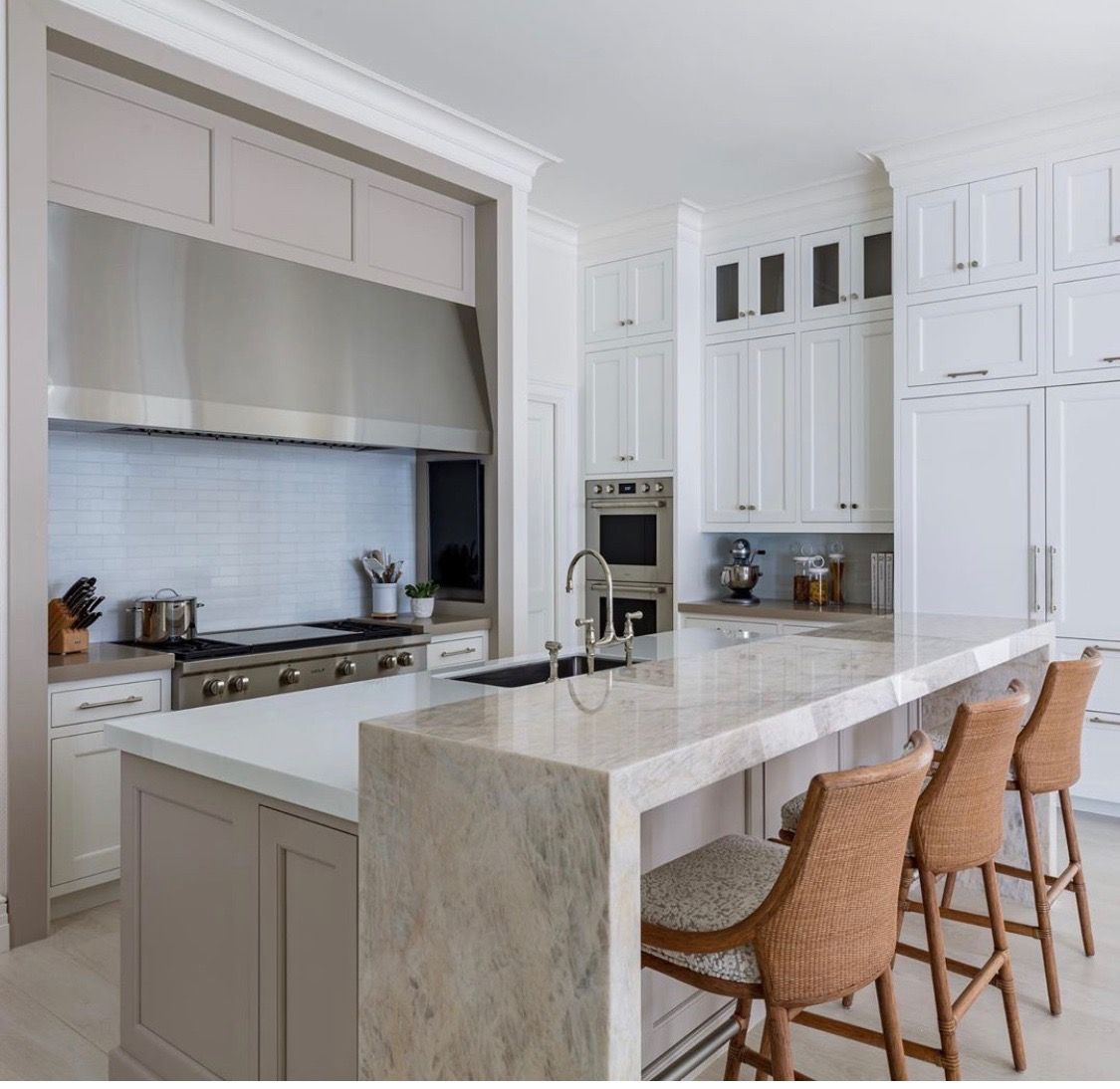
2. Multi-Level Islands: Counter Height Meets Bar Height
Who says an island needs to be one continuous height? Combining standard counter height with a raised bar-height section creates distinct zones within the same island.
This approach can be especially useful when you want to separate food preparation from casual dining. The lower counter can remain a functional workspace, while the raised section provides a comfortable place for guests to gather without interfering with the cook.
Multi-level islands can also introduce visual dimension and create opportunities to incorporate different materials, finishes, or seating arrangements.
3. L-Shaped Islands & Built-In Dining Nooks
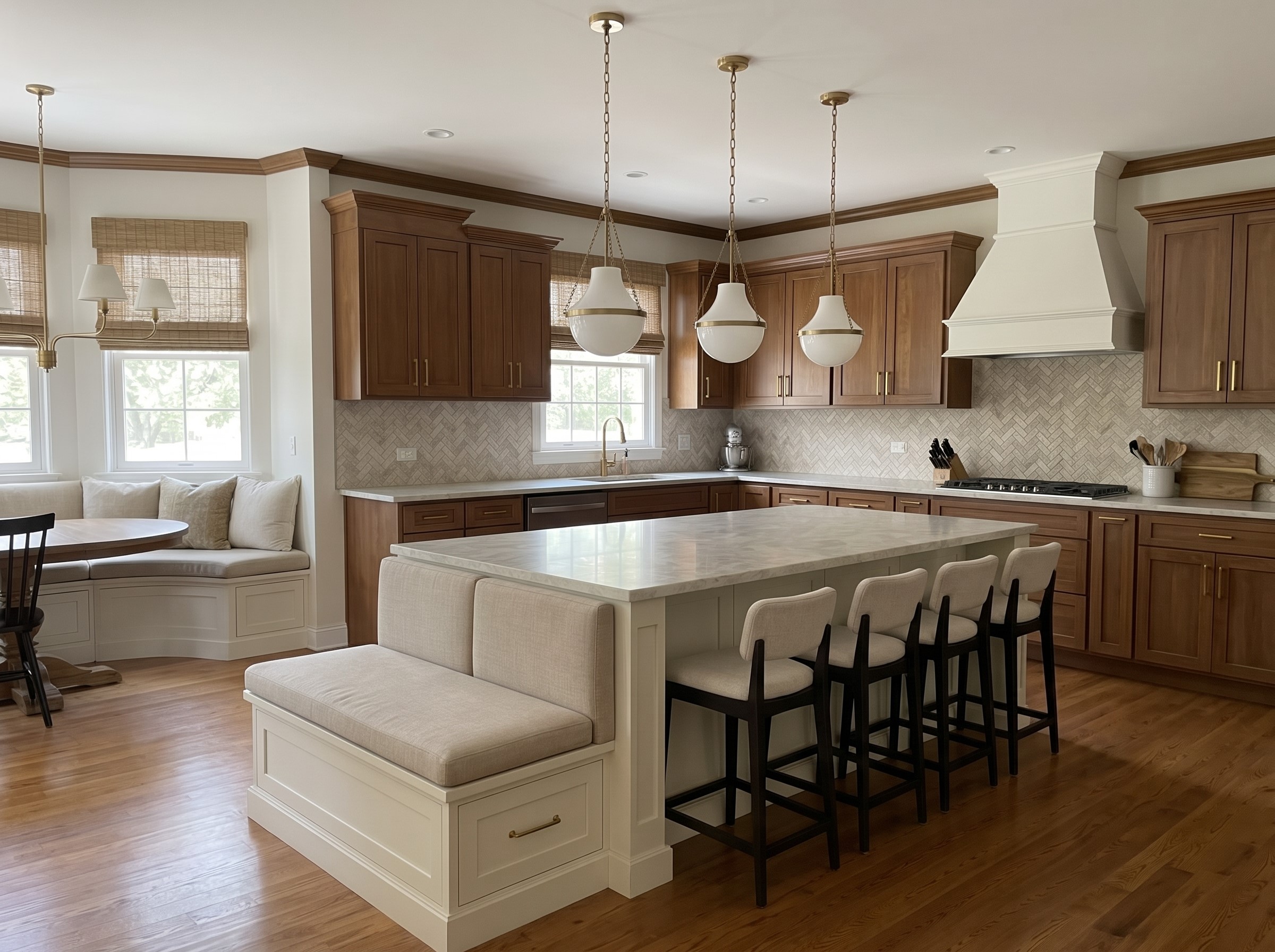
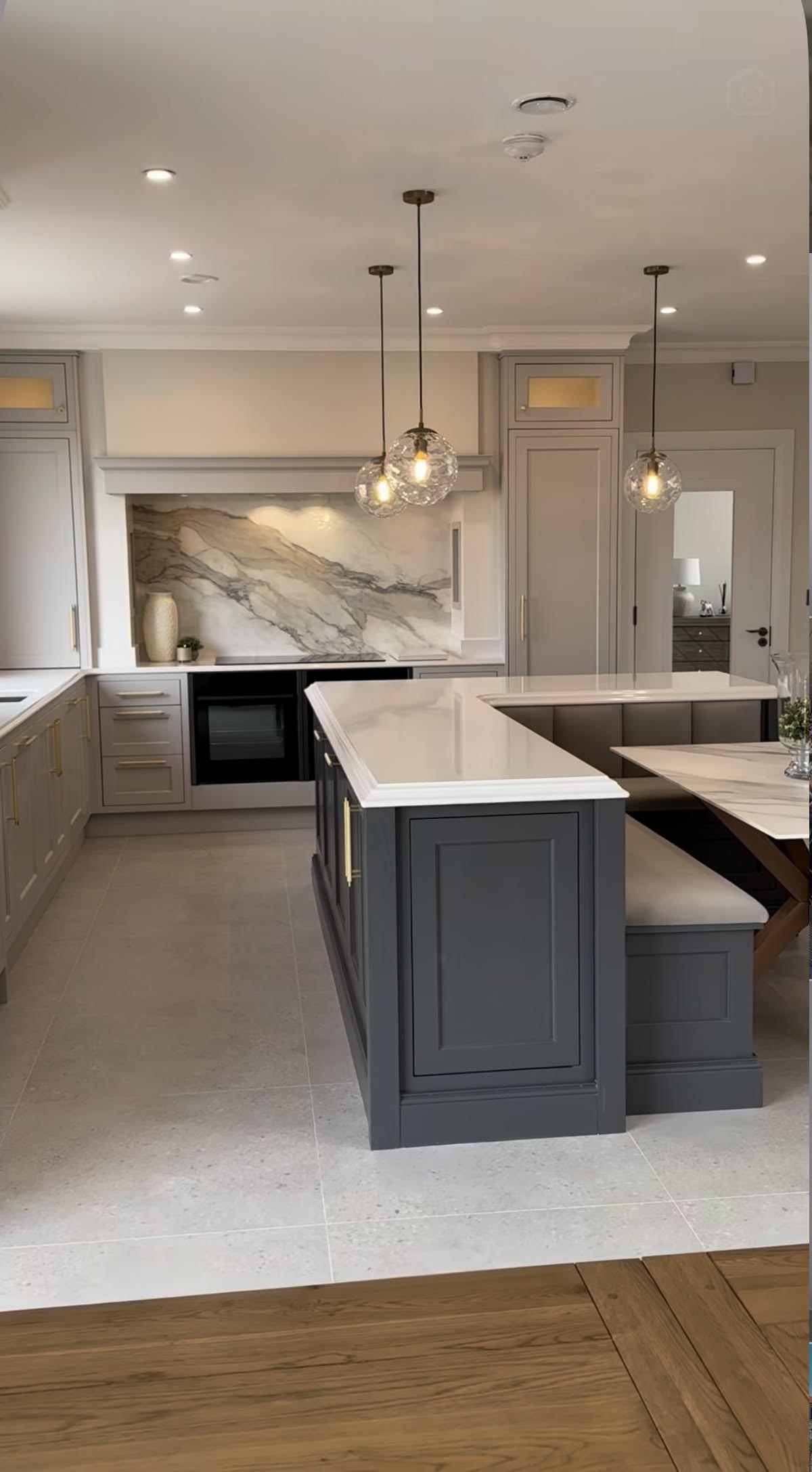
For homeowners who want their kitchen to feel more like a gathering space, an L-shaped island with integrated seating can be a wonderful solution.
Rather than lining up barstools along one side, this configuration creates a dedicated nook where family and friends can sit together. Built-in bench seating can wrap around the end or side of the island, creating a cozy, restaurant-inspired dining experience.
This design is particularly useful when you want to maximize seating without dedicating additional square footage to a separate dining table. It also offers an opportunity to incorporate upholstered cushions, accent pillows, and beautiful custom millwork.
4. U-Shaped Islands & Wraparound Seating
Taking the built-in nook concept a step further, a U-shaped island creates an intimate seating arrangement that feels almost like a breakfast booth.
With seating along multiple sides, this layout encourages conversation and makes it easy for everyone to gather around the same space. It can be especially appealing for larger kitchens where there is enough room to accommodate the additional footprint.
The key is balancing the seating area with practical workspace and ensuring there is enough room for comfortable movement around the island.

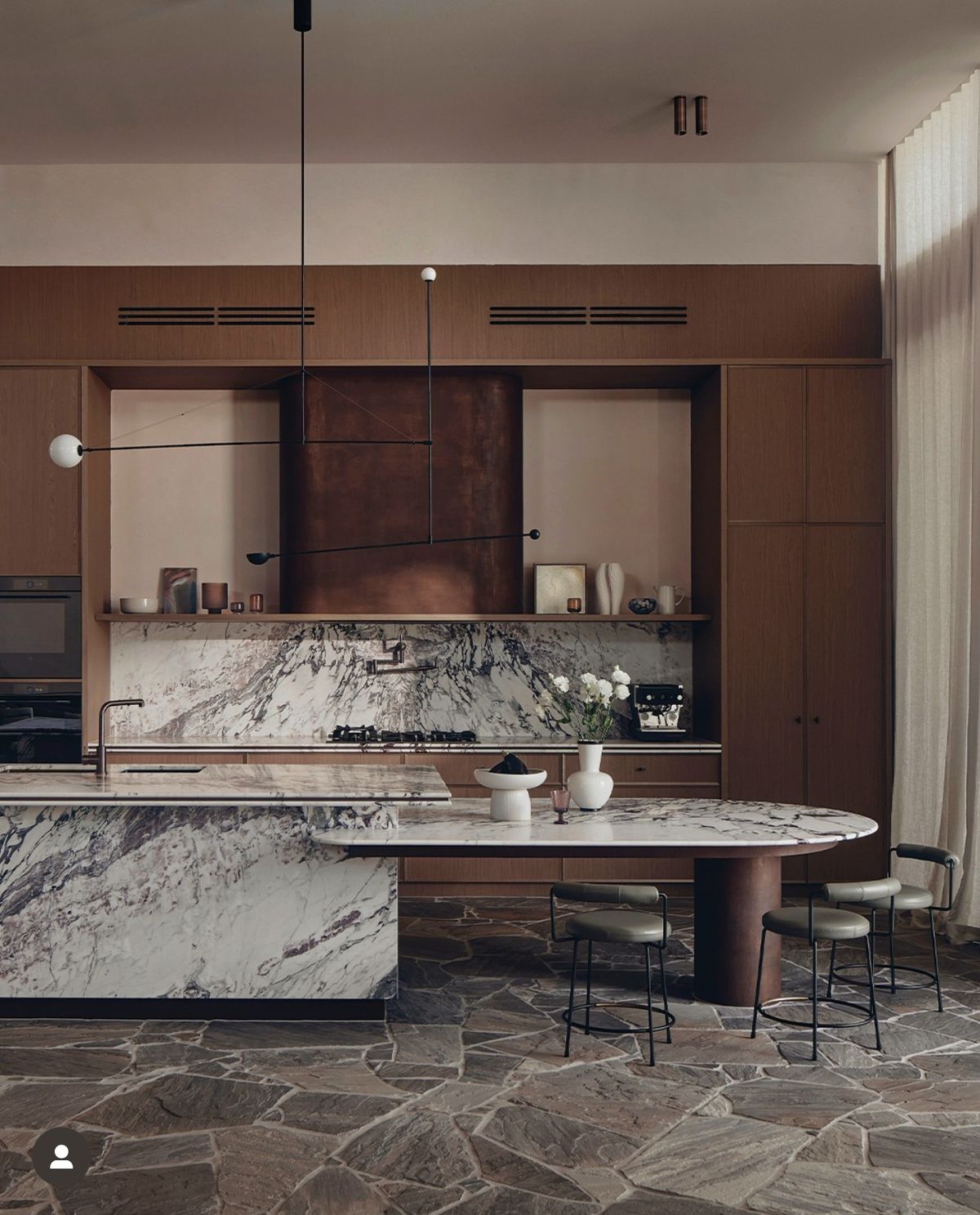
5. Islands With Extended Dining Tables
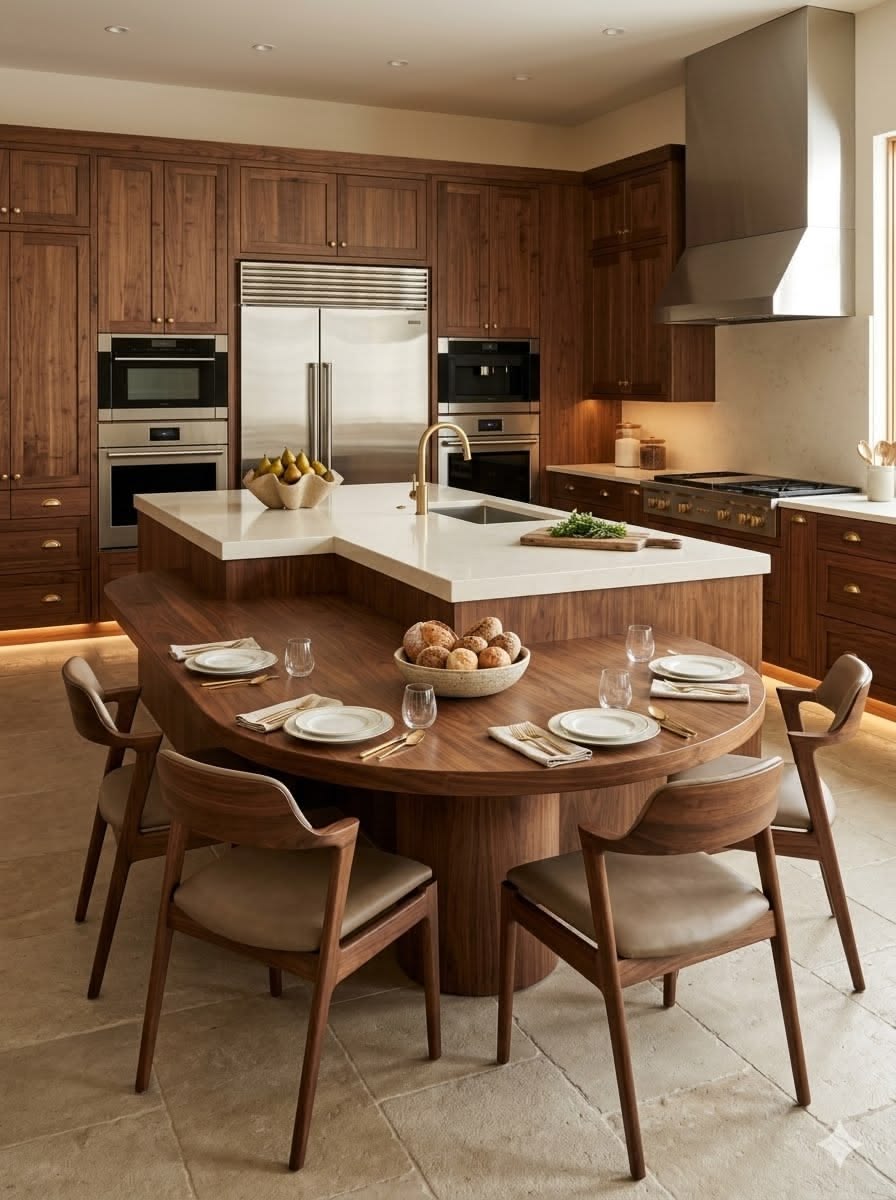
Another option is to extend the island into a traditional dining-height table. This creates a natural transition between kitchen workspace and dining area, combining two functions into one cohesive design.
The extension can be made from the same countertop material for a streamlined appearance or introduced in a contrasting wood finish to add warmth and visual interest.
This is a particularly smart option for homes where a separate dining table isn't practical but homeowners still want a comfortable place to sit down for meals.
Designing an Island Around Your Lifestyle
While the shape of an island plays a significant role in the overall aesthetic of a kitchen, its success ultimately comes down to how well it functions.
Before settling on a design, consider a few important questions:
- How many people do you typically want to seat?
- Will the island primarily be used for food preparation, dining, entertaining, or a combination of all three?
- Are there architectural features, such as a fireplace or windows, that you want to preserve and enjoy?
- How much room is available for comfortable circulation?
- Would built-in seating offer more functionality than traditional barstools?
The right island should feel like it belongs in the room. It should complement the architecture, support your daily routines, and create opportunities to bring people together.
At Hardt Studio, we believe thoughtful design is about more than making a space beautiful. It's about understanding how you live and creating a home that supports those everyday moments. Sometimes that means rethinking something as familiar as a kitchen island.
Because the best design solutions aren't always the most traditional ones.