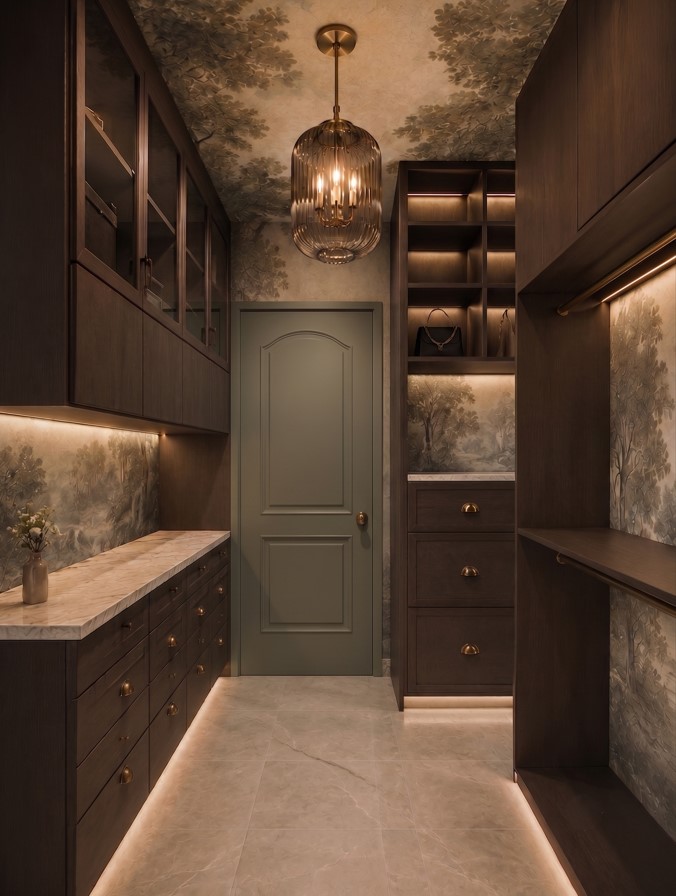
A beautiful closet is wonderful—but an efficient closet is life-changing.
The best custom closets aren't designed around standard measurements. They're designed around you. Your daily routine, your wardrobe, your hobbies, and even the little details you may not think about all play a role in creating a space that feels effortless to use every day.
Whether you're building a new home, remodeling, or simply reimagining your storage, here are the most important things to share with your interior designer before your custom closet is designed.
1. Tell Us About Your Shoe Collection
Shoes come in all shapes and sizes, and your storage should too.
Instead of squeezing every pair onto generic shelves, we can customize storage specifically for your collection. To do that, we'll want to know:
- Your shoe size (larger shoes require deeper shelves)
- Approximately how many pairs you own
- How many are everyday sneakers or flats
- Whether you own tall boots that need vertical storage
- If you have heels that benefit from angled shelving
- Whether you'd like your favorite pairs displayed
The more we know, the more functional—and beautiful—your shoe storage can be.
2. Hanging vs. Folding
Everyone stores clothing differently.
Some people prefer nearly everything hanging, while others rely heavily on drawers and folded storage. Think about your wardrobe and let your designer know approximately how much space you need for each category.
Consider:
- Long dresses
- Winter coats
- Suits or blazers
- Shirts and blouses
- Pants
- Sweaters
- Activewear
- Jeans
- T-shirts
Knowing your habits allows us to balance hanging space with drawers and shelving so nothing feels overcrowded.
3. How Tall Should Your Hanging Sections Be?
Not all hanging rods should be installed at the same height.
If you own long dresses, formal gowns, trench coats, or maxi skirts, we'll need to plan taller hanging sections so your clothing doesn't drag on the floor or become wrinkled.
If your wardrobe consists mostly of shorter garments, we may recommend double-hanging rods to nearly double your storage capacity.
4. Do You Prefer Drawers or Open Shelves?
This often comes down to personal preference.
Drawers create a clean, streamlined appearance and help reduce visual clutter, while open shelving provides quick access to frequently used items.
Think about where you'd like to store:
- Undergarments
- Pajamas
- Workout clothes
- Sweaters
- Accessories
- Handbags
The right combination makes your closet feel organized long after move-in day.
5. Do You Need a Laundry Hamper?
A built-in laundry hamper is one of those features homeowners rarely think to request—but often end up loving.
Whether it's a pull-out hamper hidden inside cabinetry or divided sections for lights and darks, incorporating laundry storage into the design keeps dirty clothes out of sight and makes everyday routines much easier.
6. Would You Like a Full-Length Mirror?
A full-length mirror is one of the most practical additions to any closet.
Depending on the space, it can be integrated into cabinetry, mounted to a wall, or added as a decorative statement piece. Planning for it early ensures it fits seamlessly into the overall design.
7. What Accessories Do You Want Easily Accessible?
Closets aren't just for clothing.
Think about everything else you reach for every day.
Some ideas include:
- Jewelry
- Watches
- Hats
- Scarves
- Belts
- Ties
- Sunglasses
- Handbags
- Wallets
- Perfume
- Everyday essentials
Dedicated storage keeps these items organized while making your morning routine much more efficient.
8. Are There Items You Store Besides Clothing?
This is one of the biggest details people forget to mention.
Many closets become home to much more than clothes. Let your designer know if you regularly store items such as:
- Luggage
- Seasonal decorations
- Extra bedding
- Blankets
- Keepsake boxes
- Gift wrap supplies
- Important documents
- Sports equipment
- Travel bags
- Vacuum cleaners or steamers
- Ironing board
- Safe or lockbox
Planning for these larger items from the beginning prevents them from becoming an afterthought later.
9. Think About Your Morning Routine
A great closet should support how you actually live.
Ask yourself:
- Do you get ready with a partner?
- Would an island make folding clothes easier?
- Do you need seating while putting on shoes?
- Would built-in lighting help you see clothing colors more accurately?
- Do you want charging stations for your smartwatch or phone?
- Would a valet rod make it easier to lay out tomorrow's outfit?
The small conveniences often become the features you'll appreciate the most.
10. Plan for the Future
Your wardrobe will likely grow over time.
Designing with a little flexibility today can help your closet continue serving you for years to come. Adjustable shelving, extra hanging space, and adaptable storage solutions make it easier to accommodate changing needs without a complete redesign.
The Bottom Line
The most beautiful closets aren't simply filled with custom cabinetry—they're thoughtfully designed around the people who use them.
Every shoe collection is different. Every wardrobe is unique. Every daily routine deserves a space that makes life just a little easier.
The more information you share with your interior designer, the more personalized your closet can become. From custom shoe storage and perfectly sized hanging sections to hidden hampers and accessory displays, thoughtful planning transforms a standard closet into one of the hardest-working spaces in your home.
At Hardt Studio, we believe great design starts with understanding how you live. If you're planning a new build or remodel, we'd love to help create a closet that's as functional as it is beautiful.
Ready to design a closet that works for your lifestyle? Schedule your consultation today—we'd love to help bring your vision to life.

.jpg)